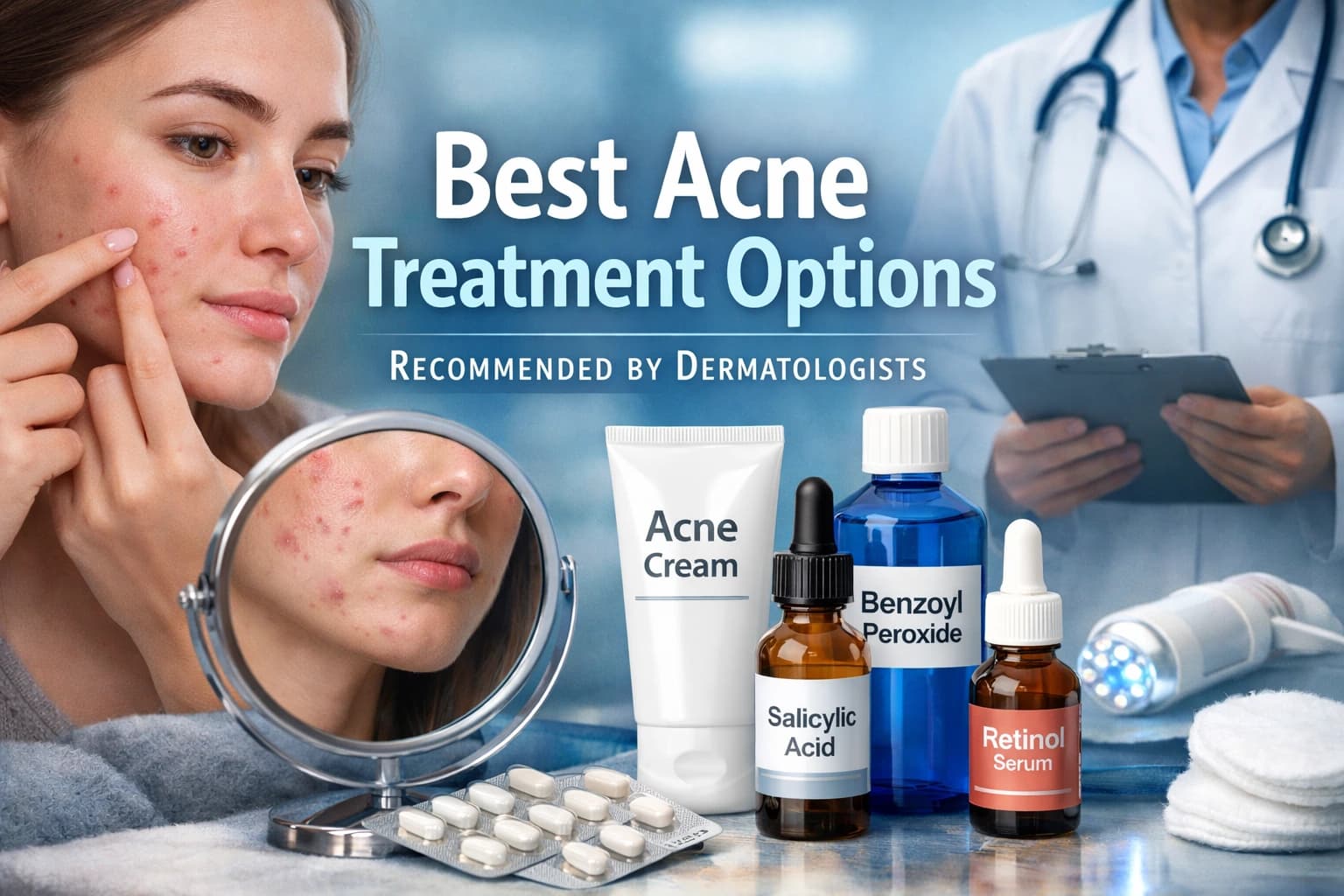
Best Acne Treatment Options Recommended by Dermatologists
Dr. Ankit Mehra
Published on February 16, 2026
Best Acne Treatment Options Recommended by Dermatologists - Expert Guide by Dr. Ankit Mehra
Hello, I am Dr. Ankit Mehra, a dermatologist practicing in Ajmer. Acne is one of the most common skin concerns I see in my clinic, affecting not just teenagers but adults as well. Beyond the visible pimples, acne can lead to significant emotional distress, scarring, and a loss of confidence.
Over the years, I've treated thousands of patients with acne, ranging from mild comedones to severe, nodular breakouts. The key to successful treatment is understanding that acne is a medical condition with a scientific basis, and what works for one person may not work for another. This guide will walk you through the best, evidence-based acne treatment options recommended by dermatologists, which are also available at our skin clinic in Ajmer.
What's in this article?
- What is Acne? Understanding the Root Cause
- Grades of Acne: From Mild to Severe
- Over-the-Counter (OTC) Options
- Prescription Topical Medications
- Oral Medications for Acne
- In-Clinic Procedures & Treatments
- Treating Acne Scars
- Building the Right Skincare Routine
- Diet & Lifestyle Factors
- Common Acne Myths Debunked
What is Acne? Understanding the Root Cause
To treat acne effectively, we must first understand what causes it. Acne is not caused by dirty skin or eating too much chocolate, as many believe. It's a multifactorial condition involving four key processes:
- • Excess Oil Production: Androgen hormones stimulate sebaceous glands to produce more sebum (oil).
- • Clogged Pores: Dead skin cells don't shed properly and mix with excess oil, forming a plug (comedone).
- • Bacteria: Cutibacterium acnes (C. acnes) bacteria thrive in this clogged, low-oxygen environment.
- • Inflammation: The bacteria trigger the immune system, leading to redness, swelling, and pus (inflammatory acne).
Grades of Acne: From Mild to Severe
Treatment is tailored to the severity of the acne. I typically classify acne into four grades:
- • Grade 1 (Mild): Mainly non-inflammatory comedones (blackheads and whiteheads), with few papules.
- • Grade 2 (Moderate): Mix of comedones, inflammatory papules, and pustules. Usually affects the face.
- • Grade 3 (Moderately Severe): Numerous papules and pustules, along with some nodules. Can involve the chest and back.
- • Grade 4 (Severe): Deep, painful nodules and cysts. High risk of widespread scarring.
Over-the-Counter (OTC) Options for Mild Acne
For Grade 1 acne, some patients can find relief with well-formulated OTC products. These are the ingredients that have the most scientific backing:
1. Benzoyl Peroxide
- • Mechanism: Kills C. acnes bacteria and helps clear pores.
- • Forms: Washes (leave on for 1-2 minutes) or leave-on creams/gels (2.5% or 5%).
- • Note: Can cause dryness and bleaching of clothes and towels.
2. Salicylic Acid
- • Mechanism: A beta-hydroxy acid (BHA) that exfoliates dead skin cells inside the pore.
- • Best For: Blackheads and whiteheads.
3. Retinoids (Adapalene)
- • Mechanism: Regulates skin cell turnover to prevent plugs. Adapalene 0.1% (e.g., Differin) is now available OTC.
- • Note: Requires consistent use and can cause initial irritation and purging.
If there is no improvement after 8-12 weeks of consistent OTC use, it's time to see a dermatologist.
Prescription Topical Medications
For Grade 2 and some Grade 3 acne, prescription topicals are often the next step. These are far more potent than OTC options.
1. Topical Retinoids (Stronger Formulations)
- • Tretinoin: The gold standard for treating comedonal acne and promoting collagen remodeling.
- • Tazarotene: A very potent retinoid for resistant acne.
- • Application: Start with a pea-sized amount every other night to build tolerance.
2. Topical Antibiotics
- • Clindamycin & Erythromycin: Reduce C. acnes bacteria and inflammation.
- • Important: To prevent antibiotic resistance, we rarely prescribe these alone. They are typically combined with benzoyl peroxide or a retinoid.
3. Combination Therapies
- • Clindamycin + Benzoyl Peroxide: A powerful combination to kill bacteria and clear pores.
- • Adapalene + Benzoyl Peroxide: Targets comedones, inflammation, and bacteria simultaneously.
4. Azelaic Acid
- • A great option for acne with post-inflammatory hyperpigmentation (dark spots), and is safe during pregnancy.
Oral Medications for Acne
For moderate to severe acne (Grade 3 and 4), or acne that doesn't respond to topicals, oral medications are often necessary.
1. Oral Antibiotics
- • Examples: Doxycycline, Minocycline, Azithromycin.
- • Purpose: To control bacteria and reduce inflammation from the inside out.
- • Duration: Used for a limited time (usually 3-4 months) to get acne under control, not as a long-term solution.
2. Hormonal Therapy (For Women)
- • Combined Oral Contraceptives: Pills containing estrogen and progestin can help regulate hormones that trigger oil production.
- • Spironolactone: An anti-androgen medication that blocks the effects of male hormones on oil glands. Highly effective for adult female acne, especially around the jawline and chin.
3. Isotretinoin (The Closest Thing to a 'Cure')
- • What it is: A powerful oral retinoid derived from Vitamin A.
- • Indication: Reserved for severe nodulocystic acne, acne that is resistant to other treatments, or acne that causes significant scarring.
- • Mechanism: It targets all four causes of acne: it shrinks oil glands, normalizes skin shedding, reduces bacteria, and fights inflammation.
- • Monitoring: Requires strict dermatologist supervision with regular blood tests due to potential side effects. It is absolutely contraindicated in pregnancy.
In-Clinic Procedures & Treatments
At our dermatology clinic in Ajmer, we offer several in-office procedures to enhance results and treat active acne.
1. Chemical Peels
- • How it works: A chemical solution (like salicylic acid, glycolic acid, or TCA) is applied to exfoliate the top layers of skin, unclog pores, and reduce inflammation.
- • Best For: Mild to moderate acne and improving acne marks. A series of 3-6 peels is usually recommended.
2. Comedone Extraction
- • A manual procedure where I use a sterile tool to safely remove large blackheads and whiteheads. This should never be done at home to avoid scarring.
3. Intralesional Corticosteroid Injections
- • For large, painful cystic bumps, a tiny amount of diluted steroid injected directly into the lesion can rapidly reduce inflammation and pain, often flattening the cyst within 24-48 hours.
4. Light and Laser Therapies
- • Certain devices can target and destroy C. acnes bacteria or shrink sebaceous glands. These are often used as adjunctive treatments.
Treating Acne Scars
Treating active acne is the first step in preventing scars. However, for those who already have scars, we have effective solutions at our laser treatment center in Ajmer.
- • Microneedling (Collagen Induction Therapy): Uses fine needles to create micro-injuries, stimulating the body's natural collagen production to fill in shallow scars.
- • Fractional CO2 Laser: A powerful resurfacing laser for deeper, more pronounced scars. It vaporizes damaged skin and triggers significant collagen remodeling.
- • Subcision: A minor surgical procedure where a needle is used to break the fibrous bands tethering down rolling scars.
- • Dermal Fillers: Can be used to temporarily lift and fill certain types of atrophic scars.
Building the Right Skincare Routine
Using the right skincare products is crucial to support your treatment and prevent irritation.
The Dermatologist-Approved Routine for Acne-Prone Skin:
- • Gentle Cleanser: Use a mild, pH-balanced, non-comedogenic cleanser twice a day. Avoid harsh soaps that strip the skin's barrier.
- • Treatment: This is where you apply your prescribed medication (retinoid, benzoyl peroxide, etc.) as directed.
- • Moisturizer: Absolutely essential, even for oily skin. Many acne treatments cause dryness. Use an oil-free, non-comedogenic moisturizer to maintain a healthy skin barrier.
- • Sunscreen: Non-negotiable. Many acne medications make your skin extremely sensitive to the sun. Daily use of a broad-spectrum, oil-free sunscreen (SPF 30+) protects against burns and prevents post-inflammatory hyperpigmentation (dark spots).
Diet & Lifestyle Factors
While diet alone doesn't cause acne, it can influence it in some people.
What the Science Says:
- • High Glycemic Load Diets: Foods that spike blood sugar (like white bread, sugary drinks, processed snacks) may worsen acne by increasing oil production and inflammation. A low-glycemic diet rich in whole foods, vegetables, and lean protein can be beneficial.
- • Dairy: Some studies suggest a link between cow's milk and acne, particularly skim milk. If you notice a pattern, you can try eliminating dairy for a few weeks to see if it helps.
- • Stress: Stress increases cortisol levels, which can trigger oil production and worsen breakouts. Incorporating stress-management techniques like exercise, meditation, or yoga is helpful.
Common Acne Myths Debunked
- • Myth: Acne is caused by dirty skin and poor hygiene.
- • Truth: Over-washing can strip the skin and make acne worse. Acne originates deep within the pore, not on the surface.
- • Myth: Popping pimples makes them go away faster.
- • Truth: Popping pushes bacteria and debris deeper, leading to more inflammation, infection, and permanent scarring.
- • Myth: Sunscreen clogs pores and causes acne.
- • Truth: Modern, oil-free, non-comedogenic sunscreens are safe and essential for protecting acne-prone skin and preventing dark spots.
- • Myth: You just have to let acne run its course.
- • Truth: This is false and dangerous. Delaying treatment can lead to permanent, disfiguring scars that are much harder to treat than the acne itself.
When to See a Dermatologist for Acne
- • OTC products haven't worked after 2-3 months.
- • Your acne is inflamed, deep, or painful (nodules or cysts).
- • Acne is leaving dark spots or scars.
- • Acne is causing you emotional distress or affecting your confidence.
My Final Thoughts as Your Skin Specialist
Acne is a treatable medical condition. My advice to patients at our skin care clinic in Ajmer is always the same: seek professional help early.
- • Early Intervention Prevents Scarring: The best way to treat acne scars is to prevent them in the first place.
- • Personalized Treatment is Key: Your acne is unique, and your treatment should be too.
- • Patience and Consistency: Acne treatments take time. It can take 8-12 weeks to see significant improvement. Don't get discouraged and stick with the plan.
- • Follow Your Dermatologist's Advice: Trust the science and the professional guidance you receive.
Remember, clear skin is achievable. With the right medical approach, we can work together to control your acne and restore your confidence.
For more information, you might find our guides on laser skin treatments or our other educational blogs helpful.
To your healthy skin journey,
Dr. Ankit Mehra, MD
Dermatologist & Skin Specialist, Ajmer
Disclaimer: This article provides general information only. Acne treatment requires in-person consultation and proper diagnosis. Please book a consultation for personalized assessment and treatment planning.
Book Your Skin Consultation Today:
- • 📞 Call: 96970 41111
- • 🌐 Website: https://drankitmehra.com
- • 📍 Clinic: 62, Lane no 2, opp. Hotel Ambassador, Nagina Bagh, Ajmer
- • 👨⚕️ About Dr. Ankit Mehra
- • 📸 View Acne Treatment Results
