Dr. Anju Mehra
Published on December 30, 2025
Hormonal Acne: Causes & Treatment - Expert Guide by Dr. Anju Mehra
Hello, I am Dr. Anju Mehra, a dermatologist in Ajmer. In my practice, I meet many patients who struggle with acne that comes and goes, especially around their chin, jawline, and cheeks. Often, this is hormonal acne - a common problem that needs special understanding and treatment.
If you've tried regular acne treatments at home without success, or if your breakouts follow a monthly pattern, this guide is for you. Let me explain hormonal acne in simple terms and show you how we can treat it effectively at our skin clinic in Ajmer.
What's in this article?
What is Hormonal Acne?
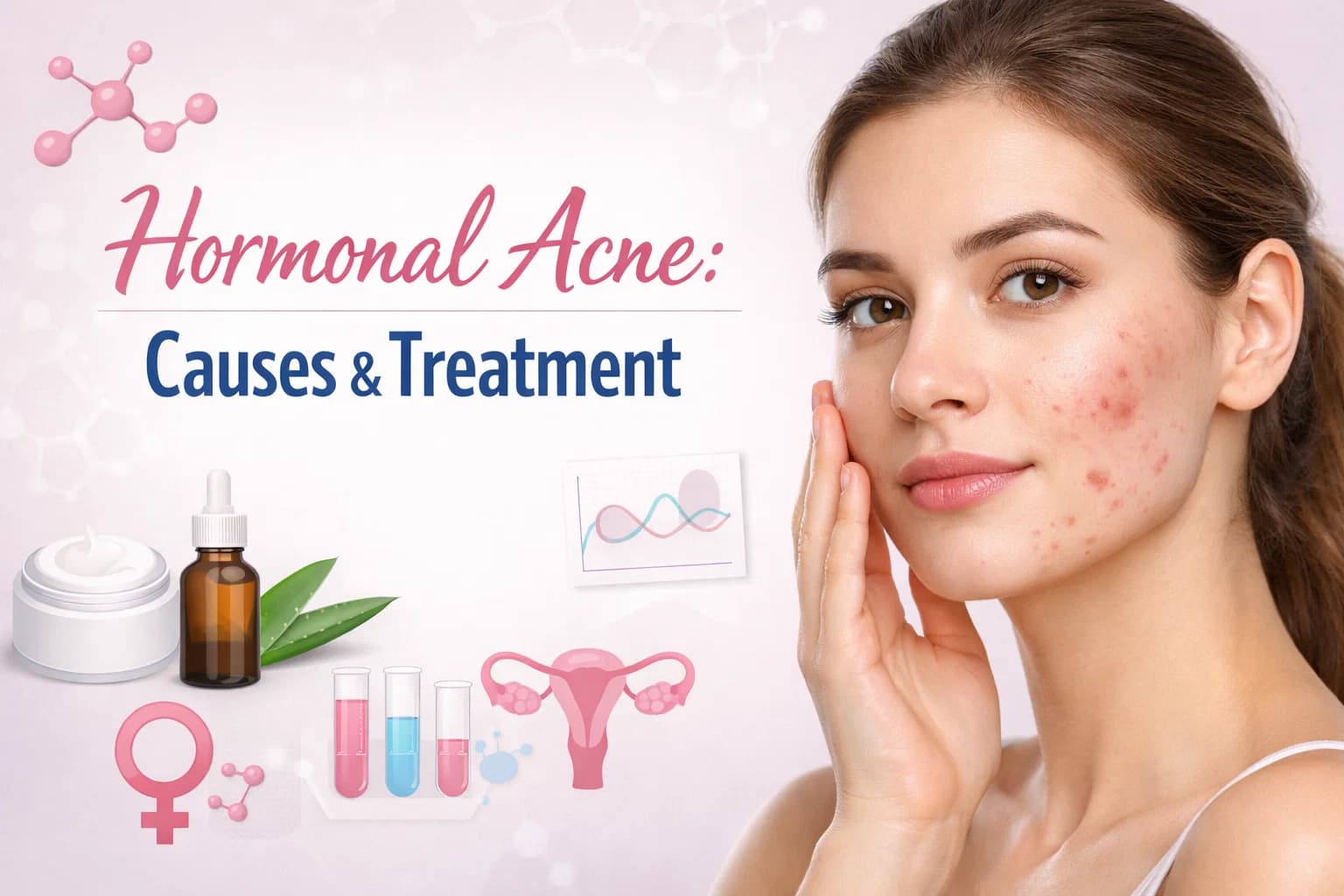
Hormonal acne is acne that happens mainly because of changes in your body's hormones. While regular acne can affect teenagers, hormonal acne often affects adults, especially women.
- • Main difference: Regular acne often improves with basic treatments, but hormonal acne keeps coming back
- • Common age: Can start in teens but often continues into 20s, 30s, and even 40s
- • Pattern: Often follows menstrual cycle in women
Common Signs of Hormonal Acne
How do you know if your acne is hormonal? Look for these signs:
- • Location: Mostly on lower face - chin, jawline, and cheeks
- • Type of pimples: Deep, painful bumps rather than surface blackheads
- • Timing: Breakouts around periods (7-10 days before period starts)
- • Other signs: May notice oilier skin during breakouts
- • Response to treatment: Regular acne treatments may not work well
Main Causes of Hormonal Acne
1. Hormone Changes During Menstrual Cycle
In women, hormones change throughout the month. Before periods, progesterone levels rise, which can increase oil production and lead to breakouts.
2. Androgen Hormones
Androgens are male hormones that both men and women have. When these are too high, they can:
- • Make skin produce more oil
- • Clog pores more easily
- • Cause inflammation
3. PCOS (Polycystic Ovary Syndrome)
Many women with PCOS have hormonal acne because of higher androgen levels. Other signs of PCOS include:
- • Irregular periods
- • Weight gain
- • Excess facial hair
4. Stress
When you're stressed, your body makes more cortisol (stress hormone). This can trigger more oil production and breakouts.
5. Diet Factors
Certain foods may make hormonal acne worse for some people. Learn more about how diet affects skin health:
- • High sugar foods
- • Dairy products (in some people)
- • Processed foods
6. Medications
Some medicines, like certain birth control pills or steroids, can affect hormones and cause acne.
Who Gets Hormonal Acne?
- • Teenagers: During puberty when hormones change rapidly
- • Women in 20s and 30s: Especially around menstrual cycles
- • Pregnant women: Hormone changes during pregnancy
- • Women approaching menopause: Hormone fluctuations
- • People with PCOS or thyroid issues
Treatment Options for Hormonal Acne
1. Topical Treatments (Applied on Skin)
These are creams, gels, or lotions you apply directly on acne:
- • Retinoids: Help unclog pores and reduce inflammation
- • Benzoyl Peroxide: Kills bacteria and reduces oil
- • Azelaic Acid: Reduces swelling and kills bacteria
- • Salicylic Acid: Helps unclog pores
2. Oral Medications (Prescription)
For moderate to severe hormonal acne, your dermatologist may prescribe:
- • Oral Contraceptives: Certain birth control pills help balance hormones
- • Anti-Androgen Drugs: Reduce effects of male hormones
- • Antibiotics: For short-term use to reduce inflammation
- • Isotretinoin: For severe, resistant cases (requires careful monitoring)
3. Professional Treatments at Our Ajmer Clinic
At my dermatology clinic in Ajmer, we offer various skin treatments including:
- • Chemical Peels: Help clear pores and reduce acne
- • Laser Treatments: Reduce inflammation and prevent new breakouts
- • Extraction Procedures: Safely remove deep pimples
- • Cortisone Injections: For quick reduction of large, painful pimples
Helpful Home Remedies
Along with medical treatment, these home remedies from our guide on acne treatment at home can help:
1. Green Tea
- • How it helps: Contains antioxidants that reduce inflammation
- • How to use: Drink 2-3 cups daily or apply cooled green tea as toner
2. Tea Tree Oil
- • How it helps: Natural antibacterial properties
- • How to use: Mix 1-2 drops with 1 tablespoon carrier oil, apply on pimples
- • Warning: Always dilute, never use pure on skin
3. Zinc Supplements
- • How it helps: Reduces inflammation and oil production
- • Food sources: Pumpkin seeds, chickpeas, lentils
- • Supplement: Consult doctor before starting
4. Spearmint Tea
- • How it helps: May help reduce androgen levels
- • How to use: Drink 1-2 cups daily
Prevention Tips for Hormonal Acne
- Follow Consistent Skincare: Learn the perfect morning and night skincare routine for Indian skin
- Manage Stress: Practice yoga, meditation, or deep breathing exercises
- Healthy Diet: Follow tips from our guide on how diet affects skin health
- Don't Pick Pimples: This causes scars and spreads bacteria
- Change Pillowcases Regularly: At least once a week
- Stay Hydrated: Drink plenty of water throughout the day
- Track Your Cycle: Note when breakouts happen to anticipate and prepare
When to See a Dermatologist
You should book a consultation at our dermatology clinic in Ajmer if:
- • Over-the-counter products don't work after 6-8 weeks
- • Acne is painful, deep, or cystic
- • Acne is leaving dark spots or scars that need scar reduction treatment
- • You have other symptoms like irregular periods or excess hair growth
- • Acne is affecting your confidence or mental health
My Final Advice as Your Dermatologist
Hormonal acne can be frustrating because it often comes back despite your best efforts. But remember:
- • Be patient: Treatments take 4-8 weeks to show results
- • Be consistent: Follow your treatment plan regularly
- • Don't give up: If one treatment doesn't work, there are others to try
- • Address the root cause: Sometimes we need to treat underlying hormone issues
If you're struggling with hormonal acne in Ajmer, I'm here to help. We can create a personalized treatment plan that addresses both your skin symptoms and any underlying hormonal factors. For severe cases, we may recommend advanced laser skin resurfacing treatments.
For acne marks that remain after treatment, check our guide on removing pimple marks naturally or consider professional pigmentation treatment at our clinic.
For more skincare tips, explore our complete blogs collection or learn about other skin rejuvenation treatments we offer.
To your clear, healthy skin,
Dr. Anju Mehra, MD
Dermatologist & Skin Specialist, Ajmer
Disclaimer: This article provides general information only. For personalized treatment, please book a consultation with a dermatologist.
Book Your Consultation Today:
- • 📞 Call: 96970 41111
- • 🌐 Website: https://drankitmehra.com
- • 📍 Clinic: 62, Lane no 2, opp. Hotel Ambassador, Nagina Bagh, Ajmer
- • 👨⚕️ About Dr. Anju Mehra
- • 📸 View Treatment Results

