
Dr. Anju Mehra
Published on April 8, 2026
How to Identify Your Skin Type at Home – Dermatologist Guide
Understanding your skin type is the first step to building an effective skincare routine. Many people use products without knowing whether their skin is oily, dry, combination, sensitive, or normal. This often leads to breakouts, irritation, and dull skin. The good news is that you can easily identify your skin type at home using simple methods.
Why Knowing Your Skin Type is Important
Your skin type determines which cleanser, moisturizer, and sunscreen will work best. Using the wrong products can cause acne, dryness, excess oil production, and damage to your skin barrier. Once you understand your skin type, you can choose products that keep your skin healthy and balanced.
The Five Main Skin Types
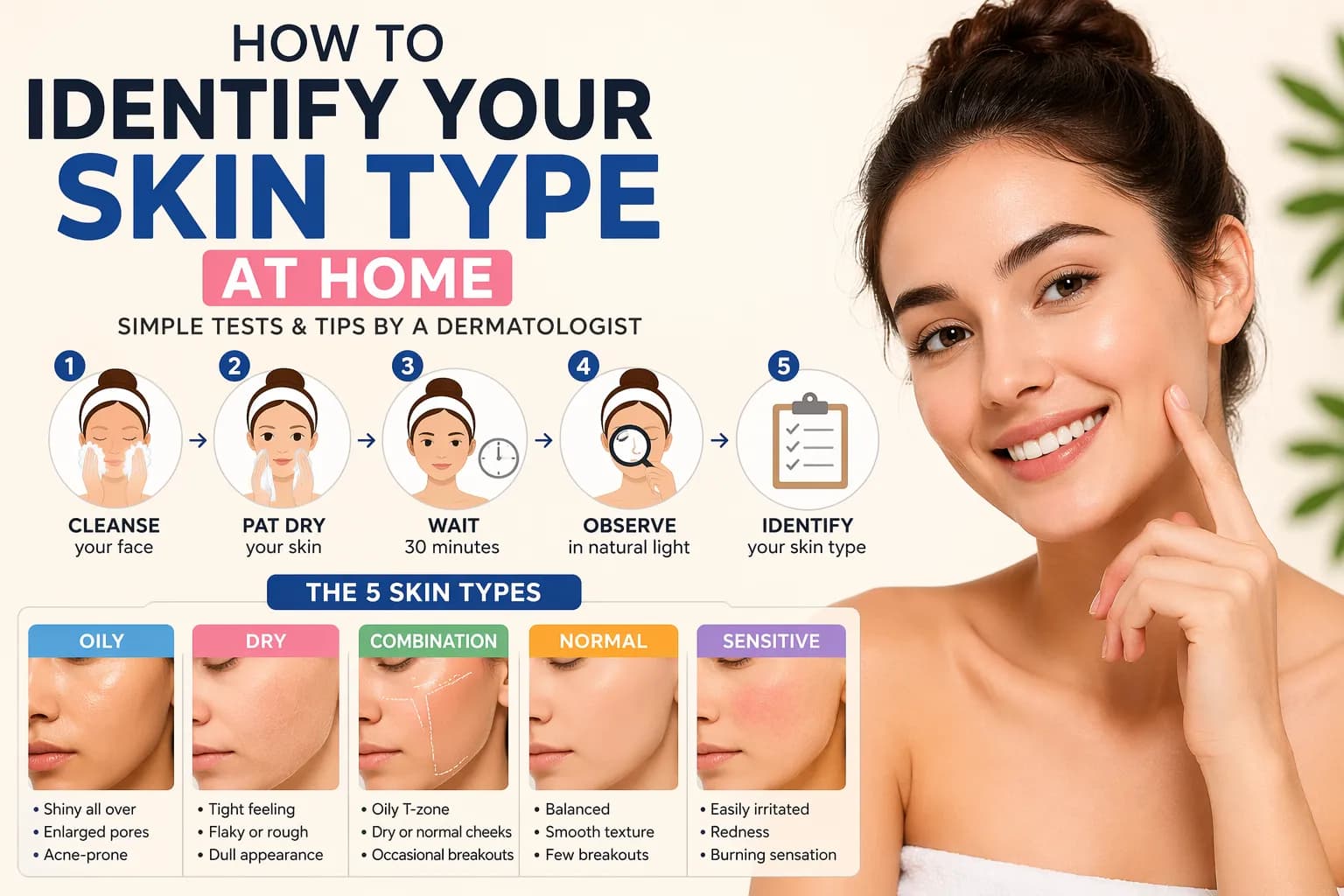
- Oily Skin: Shiny appearance, enlarged pores, frequent acne.
- Dry Skin: Tight feeling, flakiness, rough texture.
- Combination Skin: Oily T-zone with dry cheeks.
- Normal Skin: Balanced oil and hydration.
- Sensitive Skin: Easily irritated, redness, burning sensation.
Method 1: The Bare Face Test
This is one of the easiest and most reliable methods to identify your skin type.
- Wash your face with a gentle cleanser.
- Pat dry using a clean towel.
- Do not apply any skincare products.
- Wait for 30 minutes.
- Observe your skin in natural light.
If your face appears shiny all over, you likely have oily skin. If your skin feels tight or flaky, it is dry. If only the T-zone looks oily, you have combination skin. If your skin feels comfortable and balanced, it is normal. If redness or irritation appears, you may have sensitive skin.
Method 2: The Blotting Paper Test
This test helps measure oil production on different areas of your face.
- Take blotting paper or tissue.
- Press it gently on your forehead, nose, cheeks, and chin.
- Check how much oil is absorbed.
Excess oil from all areas indicates oily skin. Little to no oil suggests dry skin. Oil only in the T-zone means combination skin. Minimal oil overall usually indicates normal skin.
Method 3: The Touch Test
After cleansing your face and waiting for about an hour, gently touch your skin. Sticky skin suggests oily skin, tight skin indicates dryness, and balanced softness indicates normal skin.
How Weather Affects Your Skin Type
Skin type can change depending on the season. During summer, oil production increases, making skin appear more oily. In winter, dryness and flakiness become more common. Humid weather may lead to combination skin. It is important to adjust your skincare routine based on seasonal changes.
Common Mistakes People Make
- Assuming acne means oily skin
- Overwashing the face
- Using harsh cleansers
- Skipping moisturizer
- Copying someone else's skincare routine
What to Do After Identifying Your Skin Type
- Oily Skin: Use gel-based cleansers and lightweight moisturizers.
- Dry Skin: Use hydrating creams and avoid harsh exfoliation.
- Combination Skin: Balance hydration and target the T-zone.
- Sensitive Skin: Choose fragrance-free gentle products.
- Normal Skin: Maintain a simple routine and use sunscreen daily.
When to See a Dermatologist
- Severe acne
- Persistent dryness or oiliness
- Frequent irritation
- Uneven skin tone
- Skin reactions to products
A dermatologist can perform detailed skin analysis and recommend personalized treatments.
Conclusion
Identifying your skin type at home is simple and helps you choose the right skincare products. By using the bare face test, blotting paper test, and observing your skin, you can determine your skin type easily. Once you understand your skin, you can build a routine that keeps it healthy and glowing.
Healthy skin starts with knowing your skin type.
🌐 Visit: drankitmehra.com
