

Dr. Ankit Mehra
Published on September 29, 2026
Post-Acne Dark Spots: How to Treat Acne Marks Safely
Quick answer: Post-acne dark spots (post-inflammatory hyperpigmentation) fade with time, but you can speed it up safely. Stop picking pimples, wear broad-spectrum SPF 30+ every day, use gentle proven ingredients such as azelaic acid, vitamin C, niacinamide or a retinoid, and be patient for 8 to 12 weeks. See a dermatologist if marks persist after 3 months or if you have textured scars.
What Are Post-Acne Dark Spots?
When a pimple inflames the skin, it can trigger extra melanin, leaving a flat brown or dark mark after the pimple heals. This is called post-inflammatory hyperpigmentation (PIH). It is especially common and long-lasting in medium to deep skin tones. Not every acne mark is PIH, so identify yours first.
Acne Marks vs Acne Scars: Know the Difference
| Type | What It Looks Like | Cause | Best Approach |
|---|---|---|---|
| PIH | Flat brown, tan or dark spots | Excess melanin after inflammation | Sunscreen, brightening ingredients, time |
| PIE | Flat pink or red marks | Irritated or widened blood vessels | Sunscreen, gentle care, vascular lasers if needed |
| Atrophic scars | Pits, dents or rolling texture | Collagen loss | In-clinic procedures, not creams |
| Raised scars | Firm, thick bumps | Excess collagen | Dermatologist treatment |
How to Treat Acne Dark Spots Safely: 6 Steps
1. Calm Active Acne First
New breakouts create new marks. Start proper acne treatment with a dermatologist-approved routine so you are not fading spots while making more.
2. Never Pick or Squeeze
Picking deepens inflammation, which means darker and longer-lasting marks.
3. Use Sunscreen Every Day
UV exposure darkens PIH and slows fading. Use a broad-spectrum, water-resistant sunscreen of SPF 30 or higher, and reapply every 2 hours outdoors. Tinted mineral sunscreens with iron oxides can also help against visible light.
4. Add One Proven Ingredient at a Time
| Ingredient | How It Helps | Cautions |
|---|---|---|
| Azelaic acid | Reduces acne and pigment; gentle for most skin | Mild tingling at first; strength varies by country |
| Vitamin C | Antioxidant that supports brighter tone | Can sting; use in the morning under sunscreen |
| Niacinamide | Supports barrier and reduces uneven tone | Generally well tolerated |
| Retinoids (adapalene, tretinoin) | Speed cell turnover and treat acne | Dryness and irritation; avoid in pregnancy |
| Salicylic or glycolic acid | Exfoliate and unclog pores | Over-exfoliation can cause new PIH |
| Hydroquinone (prescription in many regions) | Strong lightening agent | Short courses only, under medical supervision |
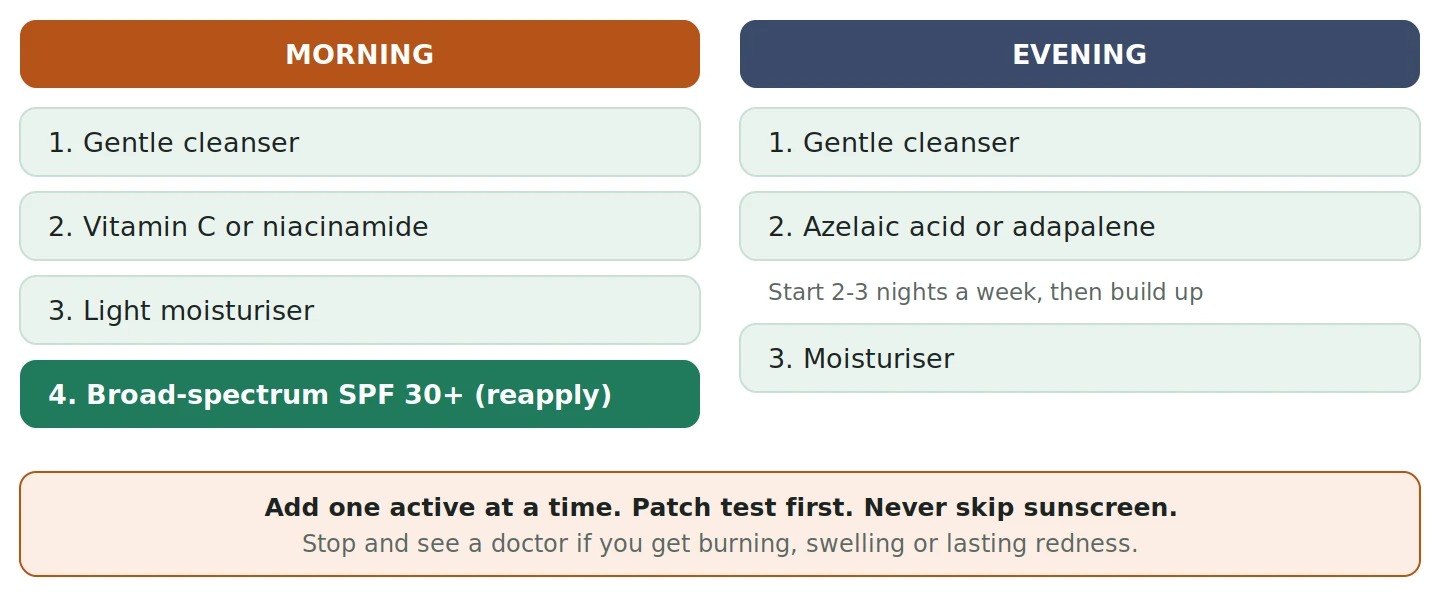
Build a simple routine around them:

| Time | Step | Product Type |
|---|---|---|
| Morning | 1 | Gentle cleanser |
| Morning | 2 | Vitamin C or niacinamide |
| Morning | 3 | Light moisturiser |
| Morning | 4 | Broad-spectrum SPF 30+ (reapply every 2 hours outdoors) |
| Evening | 1 | Gentle cleanser |
| Evening | 2 | Azelaic acid or adapalene (start 2 to 3 nights a week) |
| Evening | 3 | Moisturiser |
This is a simple starting routine. Your dermatologist may adjust it for your skin type and pregnancy or breastfeeding status.
5. Be Patient and Consistent
Topical routines usually show change in 8 to 12 weeks, and full fading can take several months to two years, depending on depth and skin tone.
| Timeframe | What to Expect |
|---|---|
| Weeks 1 to 4 | Skin adjusts to the routine. Mild dryness is possible. Marks change little, so focus on sunscreen and gentle care. |
| Weeks 8 to 12 | Many people notice early lightening of newer marks. |
| Months 3 to 6 | Steady improvement. If there is little change, review your routine with a dermatologist. |
| Months 6 to 24 | Deeper or older marks can take the longest to fade. |
6. Consider Professional Treatments
| Treatment | Best For | Notes |
|---|---|---|
| Superficial chemical peels | PIH and uneven tone | Gentler options such as mandelic acid suit darker skin |
| Microneedling | Mild texture and marks | Needs an experienced practitioner |
| Vascular lasers | Red marks (PIE) | Selected by a dermatologist |
| Fractional or other lasers | Textured scars | Can worsen pigmentation in darker skin if mis-chosen |
What to Avoid
| Avoid | Why |
|---|---|
| Lemon juice, baking soda, toothpaste | Irritate the skin and can worsen dark spots |
| Scrubbing or over-exfoliating | Inflammation creates more pigment |
| Using several actives at once | Raises irritation risk |
| Skipping sunscreen | Undoes weeks of treatment |
| Using hydroquinone long term or unsupervised | Prolonged use can cause side effects |
See a dermatologist if marks have not improved after 3 months, acne is still active or severe, you have pitted or raised scars, or any product causes burning, swelling or lasting redness. Check with your doctor before using retinoids, salicylic acid or hydroquinone during pregnancy or breastfeeding.
Final Thoughts
Post-acne dark spots are frustrating but usually temporary. The safest plan is simple: control acne, stop picking, protect your skin with sunscreen daily, add one proven ingredient at a time, and give it at least 8 to 12 weeks. Skip kitchen-cabinet remedies, and get professional advice from a dermatologist if marks linger or scars form.
Frequently Asked Questions
1. How long do post-acne dark spots take to fade?
Usually several months to two years. With daily sunscreen and proven ingredients, many people see improvement in 8 to 12 weeks.
2. What is the best ingredient for acne dark spots?
Daily broad-spectrum sunscreen is the foundation. Azelaic acid is well supported for both acne and dark marks, and vitamin C, niacinamide and retinoids can also help.
3. Do lemon juice and baking soda fade acne marks?
No. They can irritate skin, cause burns or sun-triggered reactions, and make dark spots worse.
4. What is the difference between acne marks and acne scars?
Marks are flat brown or red discolouration that fade over time. Scars are texture changes, such as pits or raised areas, and usually need in-clinic treatment.
5. When should I see a dermatologist for acne marks?
If marks have not improved after 3 months of consistent care, acne is still active or severe, you have textured scars, or products irritate your skin.
Disclaimer: This article is for general information and is not medical advice. Consult a qualified dermatologist for diagnosis and treatment.

