
Dr. Ankit Mehra LogoDr. Ankit Mehra
Dr. Ankit Mehra explaining seasonal skincare routine to a patient at his dermatology clinic in Ajmer

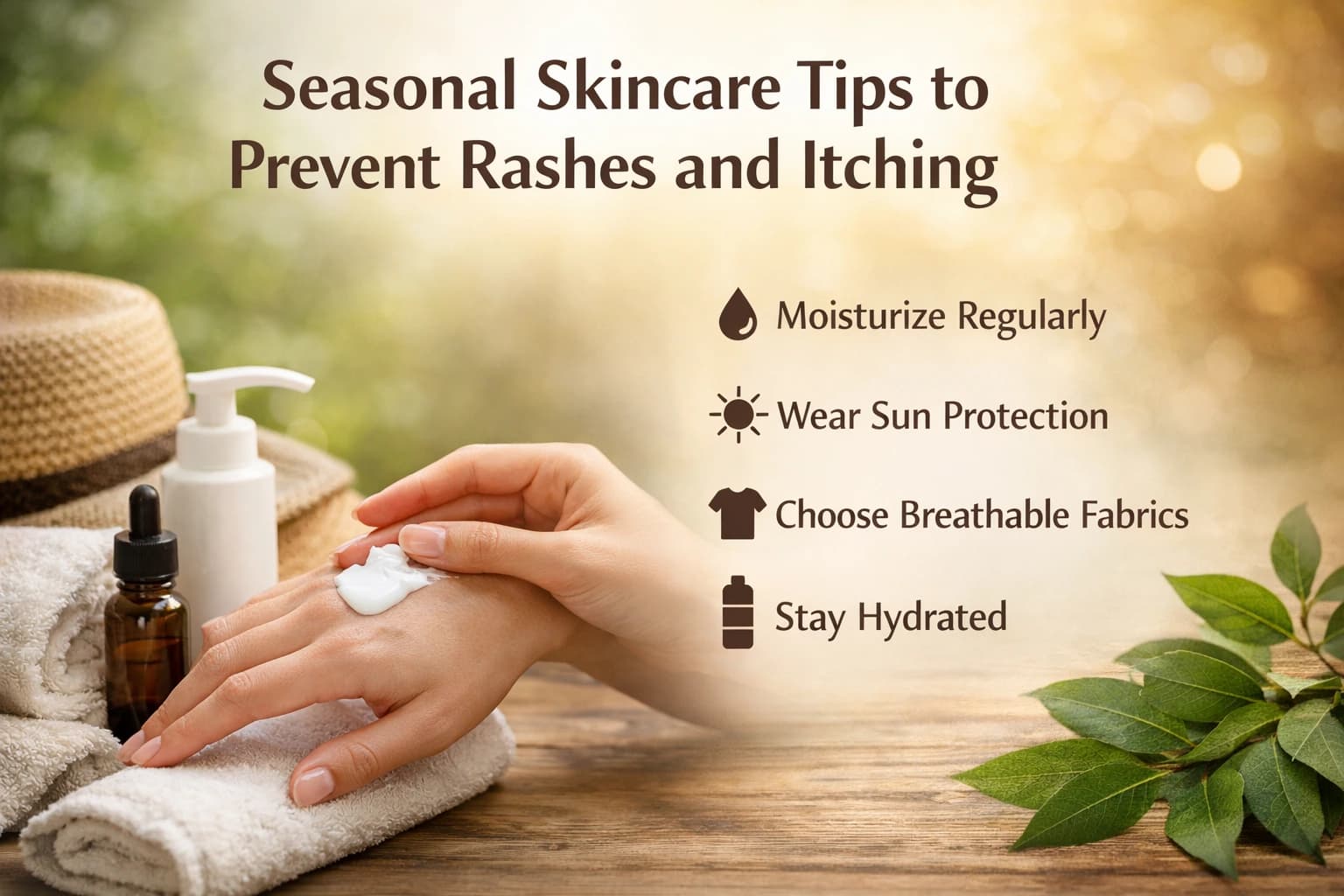
Seasonal Skincare Tips to Prevent Rashes and Itching

D

Dr. Ankit Mehra

Published on February 24, 2026

seasonal skincareprevent skin rasheswinter skincaresummer skincare routinespring allergies skineczema preventionskin barrier repairdermatologist tipsskin clinic Ajmer

Seasonal Skincare Tips to Prevent Rashes and Itching - Expert Guide by Dr. Ankit Mehra

Hello, I am Dr. Ankit Mehra, a dermatologist practicing in Ajmer. One of the most common questions I receive from patients is, "Why does my skin act up every time the season changes?" Whether it's the onset of winter dryness, summer humidity, or spring pollen, your skin is constantly adapting to the environment. Without the right care, these transitions can lead to redness, itching, rashes, and breakouts.

The good news is that with a proactive approach, you can prevent these seasonal skin woes. Over the years, I've helped thousands of patients adjust their skincare routines to match the seasons, keeping their skin healthy and comfortable year-round. This comprehensive guide will walk you through dermatologist-approved seasonal skincare tips to prevent rashes and itching, all of which are practiced at our skin clinic in Ajmer.

Why Your Skin Changes with the Seasons

Your skin is your body's largest organ and its first line of defense against the environment. It's remarkably sensitive to changes in temperature, humidity, and airborne allergens.

  • Winter: Cold air and indoor heating strip moisture from the skin, weakening the skin barrier and leading to dryness, flaking, and eczema flare-ups.
  • Spring: Increased pollen and allergens can trigger sensitivity, redness, and itchiness. The skin is also recovering from winter dryness.
  • Summer: Heat, humidity, and sweat can clog pores, leading to breakouts and heat rash. UV exposure also peaks, causing sun damage.
  • Fall: This is a transition period where skin needs to repair summer damage and prepare for winter dryness.

By understanding these seasonal stressors, you can adapt your routine to protect your skin barrier and prevent rashes and itching before they start.

Winter Skincare: Fighting Dryness & Eczema

Winter is the toughest season for your skin. The combination of low humidity outdoors and dry heat indoors creates a perfect storm for moisture loss. For those prone to eczema, this is when flare-ups are most common.

My Winter Skincare Tips:

  • Switch to a cream-based cleanser: Avoid foaming or gel cleansers that can strip natural oils. Use a gentle, hydrating, non-soap cleanser instead.
  • Use a rich, occlusive moisturizer: Look for creams containing ceramides, shea butter, or petroleum jelly to create a protective seal and lock in moisture.
  • Apply moisturizer to damp skin: Within three minutes of bathing, while skin is still damp, apply your moisturizer to trap water.
  • Take lukewarm showers: Hot water strips oils. Stick to quick, lukewarm showers.
  • Use a humidifier: Add moisture back into the air, especially in your bedroom, to counteract the drying effects of indoor heating.
  • Protect your lips: Use petroleum jelly to keep lips hydrated. Avoid licking your lips, as it dries them out further.
  • Ease up on exfoliation: Once a week is often enough in winter.

If you have eczema, consider using a prescription-strength ointment or working with your dermatologist to adjust your treatment plan before winter arrives.

Spring Skincare: Managing Allergies & Sensitivity

Spring is a season of renewal, but for your skin, it can bring a host of challenges. Pollen, mold spores, and other allergens can trigger redness, itchiness, and hives. Additionally, your skin is transitioning from the heavy creams of winter to lighter formulas.

My Spring Skincare Tips:

  • Swap to a lightweight moisturizer: Switch from rich winter creams to a lightweight, oil-free, non-comedogenic lotion or gel-cream to prevent clogged pores.
  • Cleanse thoroughly at night: Wash your face at night to remove pollen and allergens that have accumulated on your skin during the day.
  • Introduce gentle exfoliation: Use a mild chemical exfoliant (like lactic acid or mandelic acid) once or twice a week to brighten the complexion and shed winter dullness.
  • Keep a soothing moisturizer on hand: For unexpected flare-ups, use a fragrance-free moisturizer with calming ingredients like colloidal oatmeal or niacinamide.
  • Consider an air purifier: If pollen triggers your skin, an air purifier indoors can help reduce your exposure.

Summer Skincare: Beating Heat & Humidity

Summer brings heat, humidity, and increased UV exposure. Sweat mixed with oil and pollutants can clog pores, leading to breakouts and heat rash (prickly heat). Sun protection becomes the top priority.

My Summer Skincare Tips:

  • Use a gentle, pH-balanced cleanser: Cleanse twice a day to remove sweat and excess oil without stripping the skin. Ingredients like salicylic acid can help if you're prone to breakouts.
  • Switch to a gel-based moisturizer: Use a lightweight, oil-free, gel-based moisturizer that hydrates without feeling heavy.
  • Apply broad-spectrum SPF 30+ daily: Sunscreen is non-negotiable. Reapply every two hours if you're outdoors. For sensitive skin, mineral sunscreens (zinc oxide/titanium dioxide) are often better tolerated.
  • Shower after sweating: Always shower and change out of sweaty clothes to prevent fungal infections and heat rash.
  • Keep a spot treatment handy: For breakouts, look for products with salicylic acid or benzoyl peroxide.
  • Stay hydrated: Drink plenty of water to keep skin hydrated from within.

Fall Skincare: Repair & Prepare

Fall is the "rebuild" season. It's the perfect time to repair summer damage—like hyperpigmentation and dehydration—and prepare your skin for winter's chill.

My Fall Skincare Tips:

  • Add Vitamin C and retinoids: These ingredients help fade summer sun spots and boost collagen production.
  • Gradually increase hydration: Start incorporating hyaluronic acid and barrier-strengthening treatments like peptides and ceramides.
  • Be mindful of fabric choices: As you layer up, ensure clothes in direct contact with skin are soft cotton. Rough fabrics like wool can irritate sensitive skin.

Year-Round Essentials

No matter the season, these principles remain constant:

  • Gentle Cleansing: Avoid over-cleansing or using harsh soaps that strip the skin barrier.
  • Sun Protection: UV rays are present year-round, even on cloudy days. Daily SPF is essential.
  • Hydration: Drink adequate water (2-2.6 liters per day) and use humectants like hyaluronic acid.
  • Healthy Lifestyle: Prioritize sleep, manage stress, and eat a balanced diet rich in antioxidants.

Key Ingredients for Seasonal Skincare

Knowing which ingredients to look for can make all the difference. Here are my top recommendations:

  • Ceramides: Restore the skin barrier and lock in moisture. Essential for winter and fall.
  • Hyaluronic Acid: A humectant that attracts and holds water. Great for all seasons, especially winter and fall.
  • Niacinamide (Vitamin B3): Calms inflammation, strengthens the barrier, and reduces redness. Perfect for spring and summer.
  • Colloidal Oatmeal: Soothes itching and irritation. Ideal for eczema and allergy-prone skin.
  • Vitamin C: An antioxidant that protects against environmental damage and brightens skin. Use in the morning, year-round.
  • Salicylic Acid: A beta-hydroxy acid that exfoliates inside pores. Helpful for summer breakouts.

When to See a Dermatologist

While adjusting your routine can prevent many issues, some situations require professional help.

  • The rash is severe, covers a large area, or appears suddenly.
  • Itching is so intense it interferes with sleep or daily life.
  • There are signs of infection: increased pain, swelling, warmth, or oozing of yellow fluid.
  • Your skin does not improve with over-the-counter products and consistent care.
  • You have a chronic condition like eczema or psoriasis that flares with the seasons.

At our dermatology clinic in Ajmer, we offer tailored treatments, including prescription topicals, phototherapy, and professional guidance to help you manage seasonal skin challenges effectively.

My Final Thoughts as Your Skin Specialist

Your skin is a living, breathing organ that responds to its environment. By treating it with care and adjusting your routine as the seasons change, you can prevent rashes, itching, and discomfort before they start. At our skin care clinic in Ajmer, I always emphasize a proactive, rather than reactive, approach.

  • Listen to Your Skin: It will tell you what it needs. Tightness means you need more moisture. Breakouts mean you need lighter products.
  • Transition Gradually: Swap products one at a time over 1-2 weeks to allow your skin to adjust.
  • Protect Your Barrier: A healthy skin barrier is your first line of defense against environmental stressors.
  • Seek Expert Advice: A dermatologist can help you develop a personalized, season-proof skincare plan.

Remember, beautiful skin is not about using the most products—it's about using the right products for the right season. With these tips, you can enjoy every change of weather without the worry of skin problems.

For more information, you might find our guides on laser skin treatments or our other educational blogs helpful.

To your healthy skin journey,

Dr. Ankit Mehra, MD
Dermatologist & Skin Specialist, Ajmer

Disclaimer: This article provides general information only. For persistent skin issues, please consult a dermatologist for personalized assessment and treatment planning. Book a consultation at our clinic for expert care.

Book Your Skin Consultation Today:

Book an Consultation
WhatsAppPhone