
Dr. Ankit Mehra
Published on August 20, 2026
7 Signs Your Hair Fall Needs a Dermatologist's Attention
Hair fall is common, but excessive or ongoing hair loss should not always be ignored. Losing some hair while combing or washing is normal, but noticeable thinning, bald patches or continuous shedding may require professional attention.
1. You Are Experiencing Excessive Hair Fall
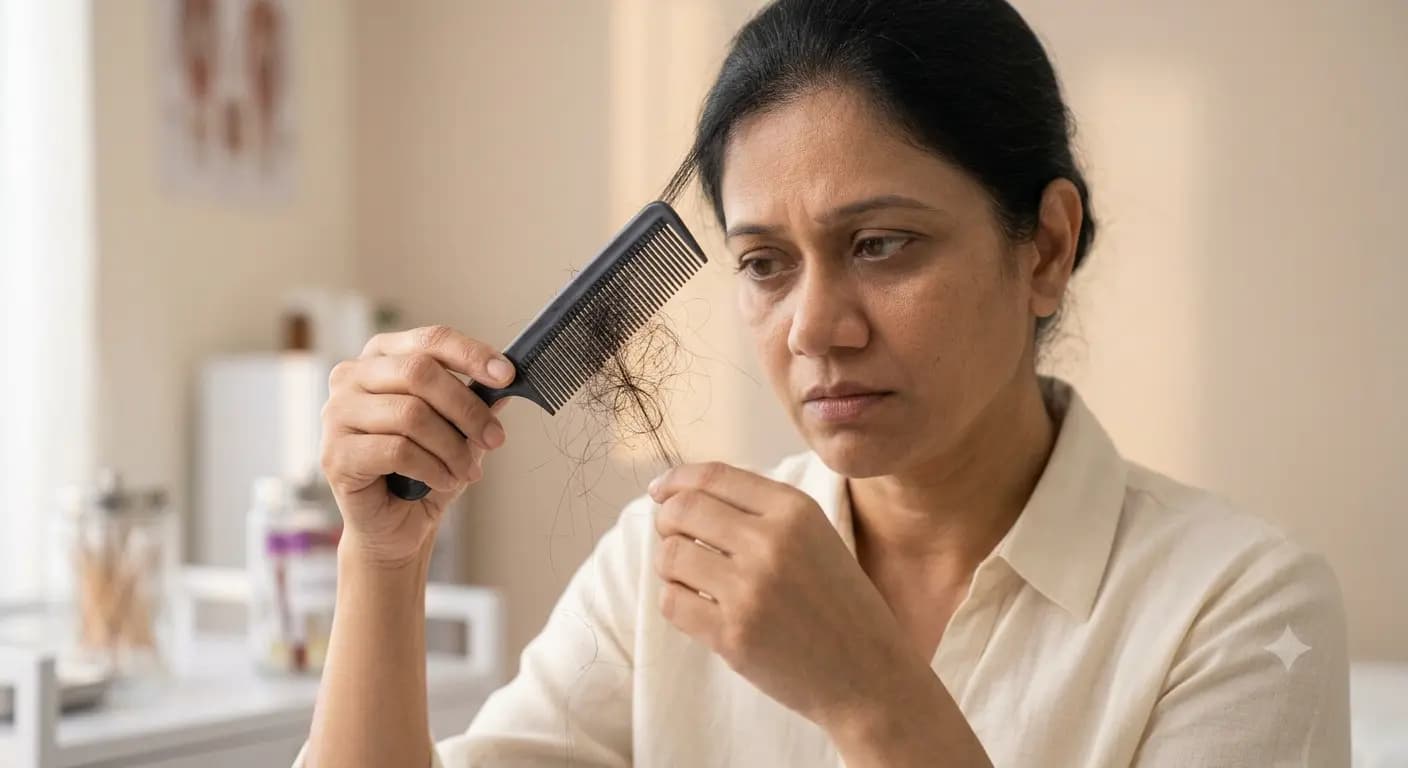
If you suddenly notice a large amount of hair on your pillow, clothes, comb or bathroom floor, you may be experiencing excessive hair fall. Temporary shedding can occur after stress, illness or changes in diet. However, persistent hair loss should be evaluated by a dermatologist to understand what is causing it.
2. Your Hairline Is Starting to Recede
A gradually receding hairline around the forehead or temples can be an early sign of pattern hair loss. If your hairline continues to move backwards, consulting a hair loss doctor in Ajmer can help determine whether the problem is genetic or related to another condition.
3. Your Hair Is Becoming Thinner
If your ponytail feels thinner, your scalp is becoming more visible or your overall hair density has reduced, you may be experiencing hair thinning. A dermatologist for hair loss can examine your scalp and assess possible causes such as genetics, hormonal changes, nutritional deficiencies or other health conditions.
4. You Notice Bald Patches
Round or clearly visible bald patches are different from general hair thinning. They can sometimes occur because of conditions such as alopecia areata or certain scalp disorders. Sudden bald patches should not be treated only with home remedies. Getting an evaluation from a hair loss specialist in Ajmer can help identify the underlying problem.
5. Hair Fall Is Accompanied by Scalp Problems
If your hair loss occurs along with itchy scalp, dandruff, redness, scaling or irritation, there may be an underlying scalp condition contributing to the problem. A dermatologist in Ajmer can examine the scalp and recommend suitable treatment for both the scalp condition and associated hair fall.
6. Your Hair Fall Started After Stress or Illness
Some people experience increased hair shedding after significant stress, illness, rapid weight loss or other physical changes. This type of hair loss may be temporary, but persistent shedding should still be evaluated. A hair fall specialist can help determine whether the hair loss is related to a recent trigger or another underlying condition.
7. Home Remedies Are Not Helping
Hair oils, shampoos and home remedies may help with general hair care, but they may not address the actual cause of hair loss. If your hair fall continues despite trying different products, it may be time to consult a dermatologist for hair loss instead of continuing to experiment with different remedies.
What Causes Hair Loss?
There can be several reasons behind excessive hair loss, including:
- Genetic or pattern hair loss
- Stress
- Nutritional deficiencies
- Hormonal changes
- Thyroid-related problems
- Scalp infections
- Certain medications
- Rapid weight loss
- Some medical conditions
This is why effective hair loss treatment should begin with identifying the reason behind the problem rather than simply treating the visible symptoms.
When Should You See a Dermatologist?
Depending on your symptoms, a dermatologist may examine your scalp and recommend appropriate tests or investigations to understand the cause of your hair loss. Treatment depends on the individual's condition and may include medicines, nutritional correction, lifestyle changes or procedures such as PRP treatment for hair loss, when considered appropriate.
Don't Ignore Persistent Hair Loss
Hair fall can have many causes, and the right approach starts with finding out why it is happening. Excessive shedding, a receding hairline, thinning hair, bald patches or ongoing scalp problems are signs that deserve attention. If you are experiencing persistent hair loss, consulting Dr. Ankit Mehra, dermatologist in Ajmer, can help you understand the possible cause and appropriate treatment options.
Frequently Asked Questions
1. Why does hair fall increase during certain seasons?
Some people notice increased hair shedding during seasonal changes. This can be temporary, but if the shedding continues or becomes more noticeable, it is worth having the scalp and hair evaluated.
2. Can tying hair tightly cause hair loss?
Yes. Frequently wearing tight hairstyles such as tight ponytails, braids or buns can place continuous tension on the hair roots. Over time, this may contribute to a type of hair loss known as traction alopecia.
3. Can dandruff lead to excessive hair fall?
Dandruff itself does not usually cause permanent hair loss, but an itchy or irritated scalp can lead to frequent scratching and increased shedding. Treating the underlying scalp problem can help reduce this issue.
4. Why is my hair breaking even though I am not losing it from the roots?
Hair breakage is different from hair loss. Frequent heat styling, chemical treatments, bleaching, excessive brushing and dryness can weaken the hair shaft and cause it to break.
5. Can frequent use of heat styling tools affect hair health?
Regular use of straighteners, curling irons and high-heat blow dryers can damage the hair shaft, making hair dry, brittle and more prone to breakage. Limiting excessive heat can help protect hair quality.
6. Is a widening hair part a sign of hair thinning?
A gradually widening part can sometimes indicate reduced hair density. If the change becomes increasingly noticeable, a dermatologist for hair loss can assess the scalp and determine what may be causing the thinning.
7. Can hormonal changes affect hair growth?
Yes. Changes in hormones can influence the hair growth cycle. Factors such as pregnancy, menopause or certain hormonal conditions may be associated with changes in hair shedding or density.
8. Why does hair sometimes become thinner after losing weight?
Rapid weight loss can place stress on the body and may affect the normal hair growth cycle. In some cases, this can lead to temporary increased shedding.
9. Can scalp infections cause hair loss?
Certain fungal or other scalp infections can cause inflammation, scaling, itching and temporary hair loss. Prompt diagnosis and appropriate treatment can help prevent the problem from becoming more severe.
10. Is hair loss always permanent?
No. Some types of hair shedding are temporary and may improve once the underlying trigger is addressed. Other forms, particularly some genetic types of hair loss, may require long-term management.

