Dr. Ankit Mehra LogoDr. Ankit Mehra
Dr. Ankit Mehra examining a patient with a skin allergy rash at his dermatology clinic in Ajmer

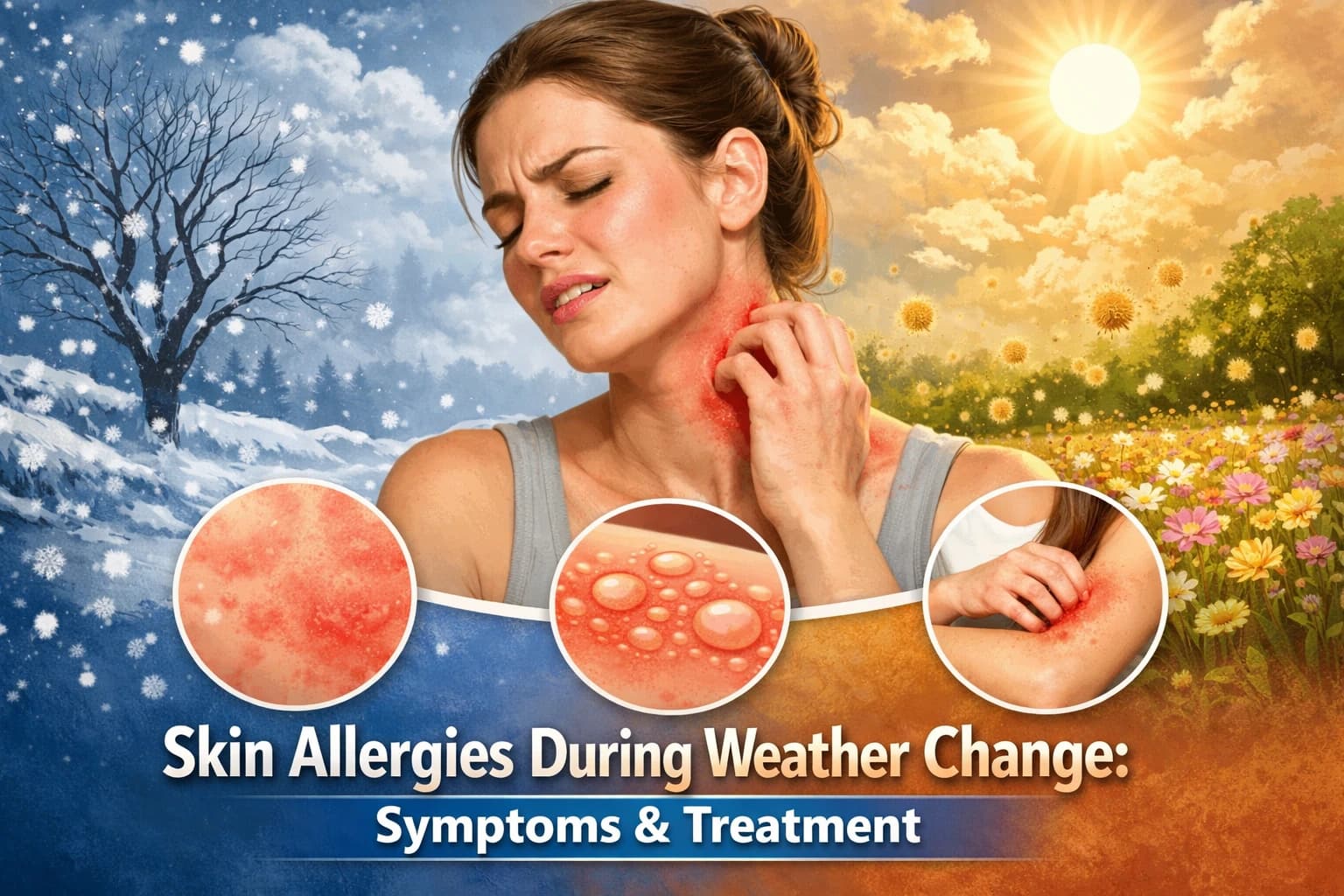
Skin Allergies During Weather Change: Symptoms & Treatment

D

Dr. Ankit Mehra

Published on February 21, 2026

skin allergiesweather change skin problemseczema treatmenthives reliefcontact dermatitisseasonal skincaredermatologist for allergiesskin clinic Ajmerhow to stop skin itching

Skin Allergies During Weather Change: Symptoms & Treatment - Expert Guide by Dr. Ankit Mehra

Hello, I am Dr. Ankit Mehra, a dermatologist practicing in Ajmer. As the seasons shift, my clinic sees a significant surge in patients complaining of sudden redness, itching, and rashes. Whether it's the transition from winter to spring or the onset of monsoon, weather changes can wreak havoc on your skin.

Over the years, I've helped thousands of patients navigate these seasonal skin sensitivities. The key to managing weather-related allergies is understanding why they happen and taking proactive steps to protect your skin's natural barrier. This comprehensive guide will walk you through the causes, symptoms, and the best dermatologist-recommended treatments for skin allergies during weather change, all of which are practiced at our skin clinic in Ajmer.

Why Does Weather Change Affect Your Skin?

To understand why your skin reacts to weather changes, you must first understand the skin barrier (stratum corneum). This is the outermost layer of your skin, acting as a protective shield against external aggressors like pollution, bacteria, and allergens. It also locks in moisture.

When the weather shifts dramatically:

  • Humidity Drops (Winter/ Dry Season): Cold air and indoor heating strip moisture from the skin, causing the barrier to crack and become permeable. This allows irritants to enter, leading to dryness and eczema flares.
  • Humidity Rises (Monsoon/Summer): Increased sweat and oil production mix with airborne pollutants and pollen. This can clog pores and trigger fungal infections or heat rashes.
  • Increased Allergens (Spring): Wind carries pollen, mold spores, and dust particles that land on the skin, directly triggering allergic reactions (allergic contact dermatitis).

Essentially, a sudden weather change stresses the skin, making it more reactive than usual.

Common Weather-Related Skin Allergies

At my practice in Ajmer, I categorize seasonal skin allergies into a few common types:

1. Atopic Dermatitis (Eczema) Flare-ups

  • When it happens: Usually during the transition from humid monsoon to dry winter, or from winter to spring.
  • What it is: Chronic inflammatory condition where the skin becomes extremely dry, red, and intensely itchy.

2. Contact Dermatitis

  • When it happens: Any season, but common in spring (plant allergens) and summer (sunscreens or insect repellents).
  • What it is: A reaction when an irritant or allergen (like nickel, perfume, or latex) touches the skin. During weather changes, the skin is more vulnerable to these triggers.

3. Urticaria (Hives)

  • When it happens: Often triggered by sudden heat (cholinergic urticaria) or cold (cold urticaria).
  • What it is: Raised, red, itchy welts (wheals) that appear suddenly and can change shape or location rapidly.

4. Prickly Heat (Miliaria)

  • When it happens: Onset of summer or monsoon.
  • What it is: Occurs when sweat ducts become blocked and swell, leading to tiny, itchy red bumps, often in skin folds.

5. Fungal Infections

  • When it happens: Monsoon (high humidity).
  • What it is: Ringworm (Tinea) or yeast infections (Candidiasis) thrive in warm, moist environments.

Symptoms to Watch Out For

Skin allergies can present differently depending on the individual and the trigger. Here are the hallmark signs I ask my patients to look for:

  • Intense Itching (Pruritus): The most common and distressing symptom.
  • Redness & Inflammation: Affected areas appear pink or red.
  • Dry, Flaky, or Scaly Patches: Indicating a compromised skin barrier.
  • Bumps or Blisters: Small, fluid-filled bumps that may ooze.
  • Hives (Wheals): Raised, swollen, pale red bumps or plaques that appear suddenly.
  • Burning or Stinging Sensation: Especially in cases of severe dryness or contact reactions.

Immediate Relief Measures

If you are experiencing a sudden flare-up, here are some steps you can take at home while waiting to see a specialist:

  • Cold Compress: Apply a clean, cool, damp cloth to the affected area for 15-20 minutes to soothe itching and reduce inflammation.
  • Lukewarm Baths with Colloidal Oatmeal: Avoid hot water, as it strips oils. A bath with colloidal oatmeal can calm irritation.
  • Stop Using New Products: Immediately stop using any new soaps, creams, or detergents that might be the culprit.
  • OTC Antihistamines: Oral antihistamines like cetirizine or fexofenadine can help control the allergic response and itching.
  • Moisturize Immediately: After bathing, while the skin is still damp, apply a thick, fragrance-free moisturizer to trap water.

Medical Treatments by Dermatologists

When home care isn't enough, it's time to visit a professional. At our dermatology clinic in Ajmer, we offer a range of treatments tailored to the severity and type of allergy.

1. Topical Corticosteroids

  • What they are: Prescription creams or ointments that reduce inflammation and suppress the overactive immune response.
  • Note: These must be used under strict dermatologist supervision. Overuse can cause skin thinning (atrophy) and other side effects.

2. Topical Calcineurin Inhibitors

  • Examples: Tacrolimus and Pimecrolimus.
  • Best For: Sensitive areas like the face and eyelids, or as a steroid-sparing agent for long-term management of eczema.

3. Oral Antihistamines

  • Prescription-strength antihistamines are often needed to control severe itching and hives.

4. Oral Corticosteroids

  • For severe, acute allergic reactions, a short course of oral steroids (like prednisolone) can quickly bring the inflammation under control.

5. Phototherapy (Light Therapy)

  • For chronic conditions like eczema and psoriasis that flare with weather changes, narrowband UVB therapy can be highly effective in modulating the skin's immune system.

6. Antifungal & Antibacterial Medications

  • If the allergy has led to a secondary infection (often from scratching), we treat the infection first with appropriate topical or oral medication.

Seasonal Skincare Routine

Prevention is better than cure. Adapting your skincare routine to the season is the best way to prevent weather-related allergies.

For Dry/Cold Weather (Winter):

  • Cleanser: Switch to a creamy, hydrating, non-foaming cleanser.
  • Moisturizer: Use an ointment or a rich cream (with ingredients like ceramides, shea butter, or petroleum jelly) to create a protective seal.
  • Humidifier: Use a humidifier indoors to add moisture back into the air.

For Hot/Humid Weather (Summer/Monsoon):

  • Cleanser: Use a gentle, pH-balanced cleanser to remove sweat and excess oil without stripping the skin.
  • Moisturizer: Switch to a lightweight, oil-free, gel-based moisturizer.
  • Sunscreen: Non-negotiable. Use a broad-spectrum, water-resistant sunscreen (SPF 30+). For sensitive skin, mineral sunscreens (zinc oxide/titanium dioxide) are often better tolerated.
  • Shower after Sweating: Always shower and change out of sweaty clothes to prevent fungal infections and heat rash.

Safe Home Remedies & Lifestyle Tips

While medical treatment is often necessary, these lifestyle adjustments can support your skin's health:

  • Wear Breathable Fabrics: Stick to soft cottons and avoid wool or synthetics that can irritate the skin.
  • Patch Test New Products: Before using any new skincare or cosmetic product, apply a small amount to your inner arm for a few days to check for a reaction.
  • Diet and Hydration: Drink plenty of water to keep skin hydrated from within. Incorporate anti-inflammatory foods like omega-3 fatty acids (fish, flaxseeds).
  • Manage Stress: Stress can trigger or worsen skin allergies. Practice yoga, meditation, or deep breathing exercises.
  • Aloe Vera (with caution): Pure aloe vera gel can be soothing for minor irritation, but ensure it's free of alcohol and additives.

When to See a Dermatologist

Many people try to self-manage skin allergies, but it's crucial to know when professional help is needed.

  • The rash is severe, covers a large area of your body, or appears suddenly.
  • The itching is so intense that it interferes with your sleep or daily life.
  • There are signs of infection: increased pain, swelling, warmth, oozing of yellow fluid, or fever.
  • The rash does not improve with OTC treatments or home care after a few days.
  • You have a history of severe allergies or asthma.

My Final Thoughts as Your Skin Specialist

Skin allergies triggered by weather changes are common, but they don't have to ruin your season. The key lies in understanding your skin's needs and adapting accordingly. At our skin care clinic in Ajmer, I emphasize the importance of a proactive, rather than reactive, approach.

  • Protect Your Barrier: A healthy skin barrier is your first line of defense against allergens.
  • Identify Triggers: Keep a diary to track when your flare-ups happen and what might be causing them.
  • Don't Ignore It: Untreated allergies can lead to chronic inflammation, lichenification (thickening of the skin), and secondary infections.
  • Seek Expert Advice: A dermatologist can provide a proper diagnosis and a personalized treatment plan that works for your specific skin type and lifestyle.

Remember, clear and comfortable skin is achievable, regardless of the season. With the right medical guidance and a consistent routine, you can enjoy every change of weather without the worry of a skin flare-up.

For more information, you might find our guides on laser skin treatments or our other educational blogs helpful.

To your healthy skin journey,

Dr. Ankit Mehra, MD
Dermatologist & Skin Specialist, Ajmer

Disclaimer: This article provides general information only. Skin allergy treatment requires in-person consultation and proper diagnosis. Please book a consultation for personalized assessment and treatment planning.

Book Your Skin Consultation Today:

Book an Consultation
WhatsAppPhone