
Dr. Anju Mehra
Published on May 19, 2026
How Often Should Women Get a Pap Smear? – Updated Guidelines for Cervical Cancer Screening
The Pap smear (or Pap test) is one of the most effective screening tools in women’s health, dramatically reducing cervical cancer rates through early detection of precancerous changes. But how often should you actually get one? The answer depends on your age, medical history, and previous test results. Many women are either over-screened or miss recommended intervals. In this comprehensive guide, Dr. Anju Mehra (Gynecologist) explains the latest evidence-based guidelines, special situations, and what to expect during the test. For personalized screening recommendations, you can book a consultation with Dr. Anju Mehra. To learn more about Dr. Mehra’s expertise and holistic approach to women’s health, visit our About Us page.
What Is a Pap Smear and Why Is It Important?
A Pap smear is a simple, quick procedure done during a pelvic exam. Your doctor gently scrapes cells from the cervix (the lower, narrow end of the uterus) to examine them under a microscope for abnormalities. The test detects precancerous changes (dysplasia) and cervical cancer long before symptoms appear. When combined with HPV testing, it can also identify high-risk strains of human papillomavirus that cause most cervical cancers. Regular screening saves lives — cervical cancer is highly preventable and treatable when caught early. For overall wellness that includes skin and hair health during hormonal transitions, explore our complete blog library.
General Guidelines: How Often Based on Age and Risk
Leading organizations including the American College of Obstetricians and Gynecologists (ACOG), the U.S. Preventive Services Task Force (USPSTF), and the American Cancer Society (ACS) have harmonized most recommendations. Here is the standard schedule for average-risk women (no prior abnormal Pap, not immunocompromised, no history of cervical cancer or diethylstilbestrol exposure in utero).
- Under 21 years: No Pap smear recommended, regardless of sexual activity. Cervical cancer is extremely rare in this age group, and screening leads to unnecessary treatment of transient HPV infections.
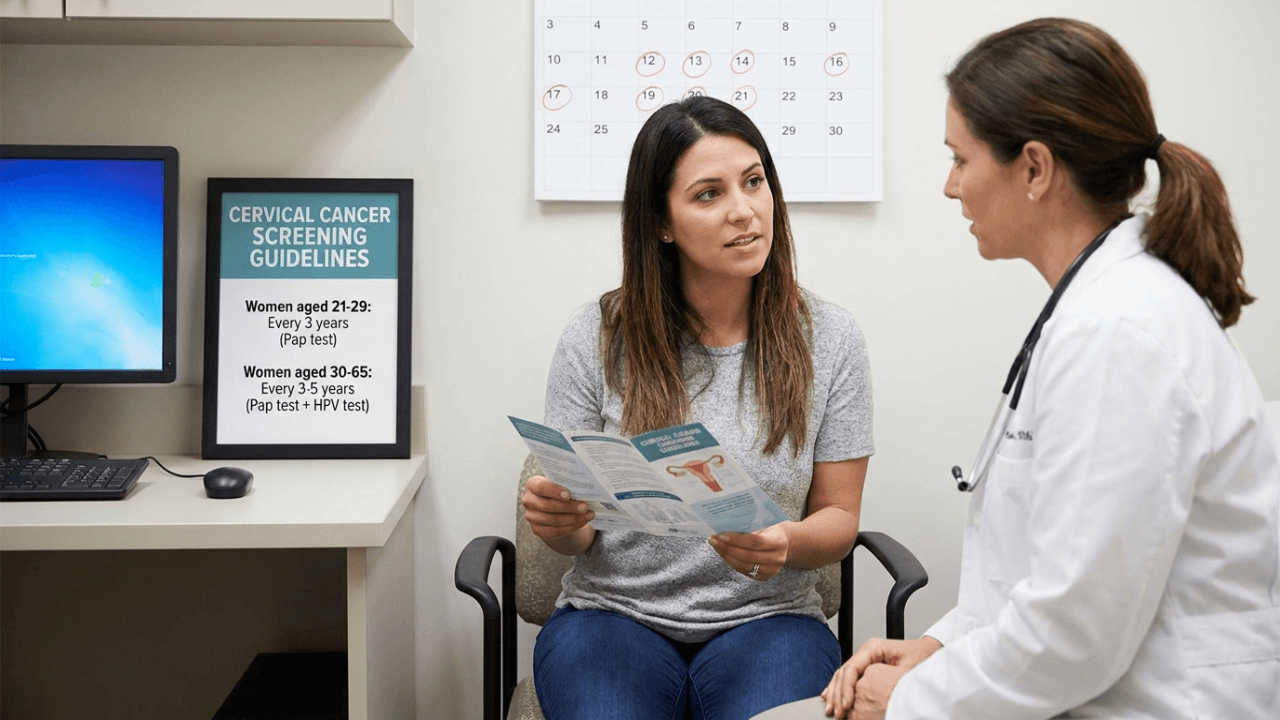
- Ages 21–29 years: Pap smear alone every 3 years. HPV testing is not routinely performed in this age range because HPV infections are very common and usually clear on their own.
- Ages 30–65 years: Three options are equally acceptable –
• Pap test alone every 3 years, OR
• HPV test alone (primary HPV screening) every 5 years, OR
• Co-testing (Pap + HPV together) every 5 years.
Co-testing is often preferred because it provides the most information. If both are negative, the risk of precancer is extremely low for 5 years. - Over 65 years: No further screening if you have had adequate negative prior screening results (three consecutive negative Pap tests or two consecutive negative co-tests within the last 10 years, with the most recent test within 5 years) and no history of cervical precancer or cancer. Once you stop, you do not resume even with new sexual partners.
When to Stop Screening Before Age 65
Women who have had a total hysterectomy (removal of the uterus and cervix) for benign reasons (e.g., fibroids, endometriosis) and have no history of cervical cancer or high-grade precancer do not need Pap smears. However, if the hysterectomy was performed for cervical cancer or precancer, screening continues. Women who had a supracervical hysterectomy (cervix left in place) still need screening per age-based guidelines. For skin changes after menopause or hormonal shifts, our advanced skin treatments can address related concerns. To see real patient outcomes from our holistic care, browse our before & after gallery.
Special Situations: Different Screening Frequencies
Some women need more frequent Pap smears (e.g., every 6 to 12 months or annually) based on risk factors or prior abnormal results.
- Previous abnormal Pap smear: Follow your doctor’s recommendation. Mild abnormalities may require repeat Pap in 12 months or HPV testing. High-grade changes often lead to colposcopy and then closer surveillance.
- HIV infection: Screening should begin within one year of sexual onset or by age 21, then twice in the first year after diagnosis, and annually thereafter. Read our blog for more on managing reproductive health with chronic conditions.
- Immunosuppressed women: (organ transplant, long-term steroid use, chemotherapy) require more frequent screening — usually annually, as per ACOG guidelines.
- History of cervical cancer or high-grade precancer (CIN 2/3): Screening continues for at least 20-25 years after treatment, often annually or every 3 years depending on follow-up protocol.
- Pregnancy: Pap smears are safe during pregnancy. If you are due for a Pap, it can be done at the first prenatal visit. Abnormal results are managed similarly but with consideration for the pregnancy. Pregnancy also brings skin changes — learn about safe pigmentation treatments postpartum.
- HPV vaccination: Even if you received the HPV vaccine (Gardasil or Cervarix), you still need regular Pap smears because the vaccine does not cover all high-risk HPV types. Vaccinated women follow the same screening schedule as unvaccinated women.
When Should You Start Screening if You Are Sexually Active Before 21?
Guidelines recommend waiting until age 21 regardless of sexual activity. Starting earlier leads to many false positives and overtreatment of infections that would resolve naturally. However, if you have symptoms (abnormal bleeding, pelvic pain, discharge), see your doctor — you may need evaluation that could include a Pap. For concerns about irregular cycles or discharge, you can schedule a consultation with Dr. Anju Mehra.
How to Prepare for a Pap Smear
To get the most accurate results:
- Avoid intercourse, douching, or using any vaginal medications (creams, suppositories, spermicides) for 48 hours before the test.
- Do not schedule during your menstrual period — heavy blood can obscure cells. Light spotting is usually fine.
- Empty your bladder before the exam for comfort.
- Tell your doctor if you have any pelvic pain, bleeding, or discharge.
- Relax — the procedure takes less than a minute.
What Happens During a Pap Smear?
You will lie on an exam table with your feet in stirrups. Your doctor inserts a speculum to gently open the vagina and visualize the cervix. Using a small spatula or brush, they lightly scrape the surface of the cervix to collect cells. You may feel mild pressure or a slight cramp, but it is not painful. The sample is sent to a lab. Results are usually ready within 1-3 weeks. For patients who experience anxiety during pelvic exams, contact our clinic — we offer a gentle, patient-centered approach.
Understanding Your Pap Smear Results
- Negative/Normal: No abnormal cells found. Return for next screening based on your age-based interval (3 or 5 years).
- Unsatisfactory: The sample had too few cells or was obscured by blood/mucus. You will be asked to repeat the test in 2-4 months.
- Abnormal (ASC-US, LSIL, HSIL, etc.): This does not mean cancer. Depending on the result and HPV status, your doctor may recommend repeat Pap in 12 months, HPV testing, or colposcopy (a closer exam of the cervix with a magnifying instrument). Most mild abnormalities resolve on their own. For high-grade lesions, treatment (LEEP or cryotherapy) prevents progression to cancer.
Pap Smear vs. HPV Test – Do You Need Both?
For women 30-65, co-testing (Pap + HPV) every 5 years is highly effective. HPV testing alone every 5 years is also an option. If your Pap is normal but HPV is positive for a high-risk strain, your doctor may shorten the screening interval (e.g., repeat co-test in 12 months) or perform colposcopy based on the specific HPV type. Ask your doctor what is best for you. To learn about other preventive health measures, explore our complete blog library covering topics like hormonal acne treatment, advanced hair loss solutions, and laser skin rejuvenation.
Common Myths About Pap Smear Frequency
- Myth: “I’ve had the HPV vaccine, so I don’t need Pap smears.”
Fact: The vaccine covers 70-90% of cancer-causing HPV types, not all. Regular screening remains essential. - Myth: “I’m not sexually active anymore, so I can stop screening.”
Fact: If you are under 65, continue according to guidelines. HPV can be dormant for years and reactivate. - Myth: “Yearly Paps are always better.”
Fact: Over-screening leads to unnecessary procedures, anxiety, and costs. Following evidence-based intervals is safe and effective. - Myth: “After menopause, I don’t need Paps.”
Fact: Women 30-65 need screening as above. Over 65 with adequate negative history can stop. But if you have new bleeding or symptoms, see your doctor. For menopausal skin and hair concerns, skin rejuvenation and PRP therapy for hair can help. - Myth: “A Pap smear tests for STIs or ovarian cancer.”
Fact: It screens only for cervical cell changes. Ask separately for STI testing or other concerns.
What Happens If You Miss a Pap Smear?
Missing one interval by a few months is not a crisis, but delaying for years does increase the risk of missing precancerous changes. If you are overdue, schedule an appointment as soon as possible. Cervical cancer develops slowly (over 5-10 years), so catching up on screening is still beneficial. Book a consultation with Dr. Anju Mehra today for a prompt appointment.
Summary Table: Pap Smear Frequency by Age and Risk
- Under 21: No screening (average risk).
- 21-29: Pap alone every 3 years.
- 30-65 (average risk): Pap every 3 years OR HPV every 5 years OR co-test every 5 years.
- Over 65: Stop if adequate negative history.
- After hysterectomy (benign, no cervix): Stop.
- HIV/immunosuppressed: Annually (or per specialist).
- Previous CIN 2/3 or cancer: Follow gyn-oncology protocol (usually more frequent).
When to See a Doctor Outside Scheduled Screening
Do not wait for your next Pap if you experience:
- Bleeding after intercourse, between periods, or after menopause
- Pelvic pain or pressure
- Unusual vaginal discharge (foul-smelling, bloody, or watery)
- Pain during urination or intercourse
These symptoms may indicate conditions other than cervical cancer (infection, polyps, fibroids) but need evaluation. For skin conditions that sometimes accompany gynecologic issues (e.g., vulvar dermatitis), see our dermatology services or acne and dermatitis treatments. If you're also dealing with hair thinning due to hormonal shifts, explore our hair treatments.
Pap Smear During Pregnancy – Is It Safe?
Absolutely. Pregnancy does not affect Pap smear accuracy. If you are due for screening, your OB/GYN will perform it at the first prenatal visit. An abnormal result during pregnancy is usually followed by colposcopy (safe in pregnancy), but treatment (if needed) is often deferred until after delivery unless cancer is suspected. For pregnancy-related hair or skin changes, read our guide on hair loss treatments and pigmentation solutions.
How to Find Your Last Pap Smear Date
If you can’t remember when you last had a Pap, call your previous doctor’s office. Many electronic medical records provide patient portals. You can also start fresh with a new provider — they will likely repeat the test if the interval is unknown or >5 years. To establish care with Dr. Anju Mehra, contact our clinic or schedule online.
The Bottom Line: A Personalized Approach Is Best
General guidelines give you a roadmap, but your gynecologist may adjust frequency based on your unique risk factors, previous results, and overall health. The most important step is to get screened regularly — whether every 3 or 5 years — and to never ignore symptoms. Cervical cancer is one of the most preventable cancers thanks to Pap smears and HPV vaccination. For women over 30, co-testing every 5 years is convenient and highly reliable. For younger women, Pap alone every 3 years is safe and avoids overtreatment.
If you have questions about your next Pap smear or want to schedule your screening, book a consultation with Dr. Anju Mehra today. For more health and wellness guidance, browse our complete blog library — including posts like acne & pimples complete guide, how diet affects skin health, and best skin treatments for glowing skin in 2025. For cosmetic procedures that support overall well-being, explore our laser treatments, laser hair removal, and anti-aging solutions.
🌐 Visit: drankitmehra.com

