
Dr. Anju Mehra
Published on April 21, 2026
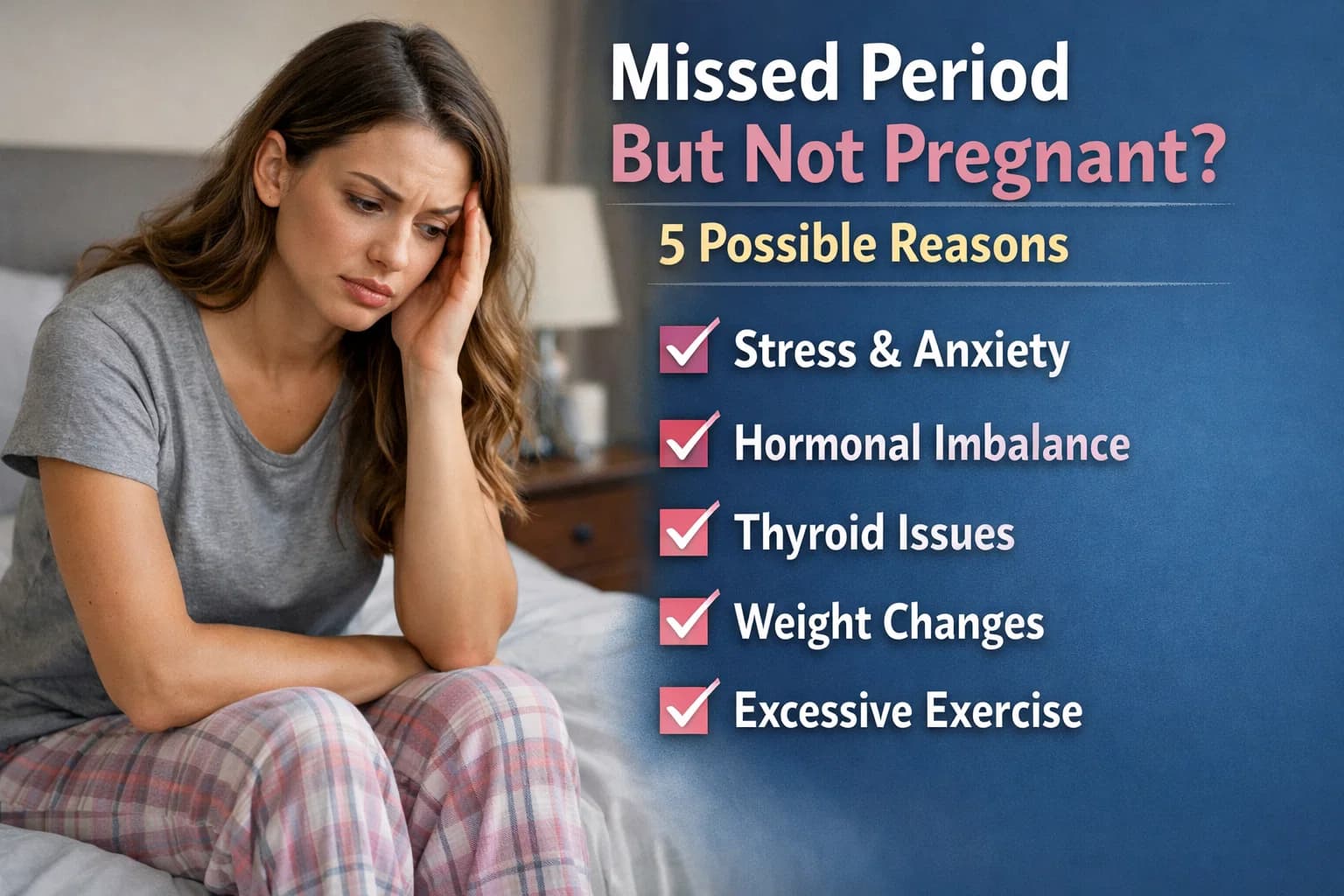
Missed Period But Not Pregnant? – 5 Possible Reasons Explained
A missed period often triggers an immediate thought: could I be pregnant? But when a pregnancy test comes back negative, many women feel confused and worried. The truth is, periods can be delayed or absent for many reasons other than pregnancy. Understanding these causes can help you identify what’s happening in your body and when to seek medical advice. For overall skin and hormonal health, you can always book a consultation with Dr. Anju Mehra.
What Is Considered a Missed Period?
A normal menstrual cycle ranges from 21 to 35 days. If you are more than 7 days late and have had a negative pregnancy test, it is considered a delayed period. When you miss three or more consecutive periods without being pregnant, it is called amenorrhea. Occasional delays are common, but persistent absence needs evaluation.
5 Possible Reasons for a Missed Period (Besides Pregnancy)
- 1. Chronic Stress: High stress levels trigger cortisol production, which can suppress the hypothalamus — the part of your brain that regulates menstrual hormones. Even short-term intense stress can delay ovulation or stop it entirely, leading to a late or missed period. Stress also affects your skin; learn how weather changes and stress can trigger skin allergies.
- 2. Polycystic Ovary Syndrome (PCOS): PCOS is one of the most common hormonal disorders in women of reproductive age. It causes an imbalance of reproductive hormones, leading to irregular ovulation or anovulation (no egg release). Many women with PCOS experience fewer than 9 periods per year. PCOS is also closely linked to hormonal acne, which a dermatologist can help manage.
- 3. Thyroid Disorders: Both an overactive thyroid (hyperthyroidism) and underactive thyroid (hypothyroidism) can interfere with your menstrual cycle. The thyroid gland helps regulate metabolism and hormone production, and any imbalance can cause periods to become light, irregular, or stop altogether. If you’re experiencing unexplained hair fall along with period changes, read our guide on hair fall causes and treatments.
- 4. Significant Weight Changes or Eating Disorders: Losing or gaining a large amount of weight rapidly can disrupt estrogen production. Being underweight (common in anorexia or extreme exercise) stops the body from producing enough estrogen. On the other hand, obesity can lead to excess estrogen, throwing off the normal cycle. Maintaining a healthy weight is also key for how diet affects your skin health.
- 5. Perimenopause: Women in their 40s often enter perimenopause — the transition phase before menopause. During this time, estrogen and progesterone levels fluctuate unpredictably, causing skipped periods, shorter cycles, or longer gaps between periods. It is a natural part of aging, not a disease.
Other Possible Causes of a Missed Period (Beyond the Top 5)
- Excessive Exercise: Female athlete triad syndrome (low energy, menstrual dysfunction, low bone density) is common in endurance athletes and dancers.
- Medications: Birth control pills, hormonal IUDs, emergency contraception, antidepressants, and antipsychotics can alter or stop your period.
- Chronic Diseases: Uncontrolled diabetes, celiac disease, and Cushing’s syndrome may affect menstrual regularity.
- Primary Ovarian Insufficiency (POI): When ovaries stop functioning normally before age 40, periods may become irregular or stop.
- Prolactin Imbalance (Hyperprolactinemia): High levels of prolactin (the milk-producing hormone) can suppress ovulation.
When Should You Take a Pregnancy Test Again?
Home pregnancy tests are very accurate when used correctly, but testing too early can give a false negative. Wait at least one week after your missed period. For best results, test first thing in the morning. If your period is 2 weeks late and the test is still negative, it is very unlikely you are pregnant — but a blood test at your doctor’s office can confirm.
Signs You Should See a Doctor
- You have missed three or more periods in a row (and not pregnant)
- You have missed one period but have symptoms like severe pelvic pain, unusual discharge, or fever
- You are under 16 or over 45 with sudden cycle changes
- You have signs of thyroid issues (fatigue, weight changes, hair loss, temperature sensitivity)
- You have milky nipple discharge (possible high prolactin)
- You are trying to conceive and cycles are irregular
How Is the Cause Diagnosed?
A gynecologist will typically perform:
- Detailed medical and lifestyle history (stress, exercise, diet, medications)
- Pelvic examination
- Blood tests: pregnancy test (beta-hCG), TSH (thyroid), prolactin, FSH, LH, estrogen, testosterone, and androgen levels
- Pelvic ultrasound to check ovaries, uterus, and endometrial thickness
- Sometimes a head MRI if prolactin is very high (to rule out pituitary tumor)
Treatment Options Based on the Cause
- For stress-related missed periods: Therapy, relaxation techniques, yoga, adequate sleep, and time management often restore cycles within a few months.
- For PCOS: Lifestyle changes (weight loss if overweight), metformin, hormonal birth control to regulate cycles, or ovulation induction if trying to conceive. For associated skin issues, check these acne treatment remedies.
- For thyroid disorders: Levothyroxine (for hypothyroidism) or anti-thyroid drugs (for hyperthyroidism) normalize thyroid levels and usually restore menstruation.
- For weight-related issues: Working with a dietitian to achieve a healthy BMI; treatment for eating disorders if present.
- For perimenopause: Usually no treatment is needed unless symptoms are bothersome; low-dose birth control or hormone therapy can help regulate cycles.
- For hyperprolactinemia: Dopamine agonist medications like cabergoline or bromocriptine.
Can You Induce a Missed Period Naturally?
While you cannot force a period to come, some lifestyle measures may help if the delay is due to stress or mild hormonal fluctuations:
- Reduce intense exercise for a few weeks
- Eat a balanced diet with healthy fats (avocado, nuts, olive oil)
- Practice stress reduction (meditation, walking, deep breathing)
- Maintain a regular sleep-wake cycle
- Avoid crash dieting or rapid weight loss
Caution: Do not take herbal emmenagogues (like parsley tea or vitamin C in high doses) without medical advice — they can be ineffective or cause side effects.
When a Missed Period Is Normal
- First 2 years after your first period (menarche): Cycles are often irregular as your body matures.
- While breastfeeding: Prolactin suppresses ovulation, so periods may be absent for months.
- After stopping hormonal birth control: It can take 3–6 months for natural cycles to resume.
- During perimenopause (age 40–50): Skipping periods is expected.
Prevention Tips for Healthy Cycles
- Manage chronic stress proactively
- Maintain a stable, healthy weight
- Avoid overtraining — include rest days in your fitness routine
- Eat enough calories and nutrients (especially iron, vitamin D, and B vitamins)
- Get your thyroid and prolactin levels checked if you have risk factors
- Track your cycle using an app to notice patterns early
Conclusion
A missed period with a negative pregnancy test is usually not a cause for panic. The five most common reasons — stress, PCOS, thyroid issues, weight changes, and perimenopause — are all manageable with proper medical guidance. Occasional delays happen to many women. However, if you miss three or more consecutive periods, or if you have other concerning symptoms, schedule an appointment with a gynecologist or visit our clinic for expert advice. Your menstrual cycle is a valuable sign of your overall health — listen to what it’s telling you. For more skin, hair, and wellness tips, explore our complete blog library.
🌐 Visit: drankitmehra.com

